
Technology
Pittston native Chris ‘Motionless’ Cerulli shares his journey from NEPA to international fame
By Evan Mitchell
Advertisement · Why this ad?
Samantha is a culinary enthusiast with a degree from the Culinary Institute of America and has written for food blogs and dining sections within local papers for over three years. Her background in culinary arts informs her insightful food critiques.
More from Samantha →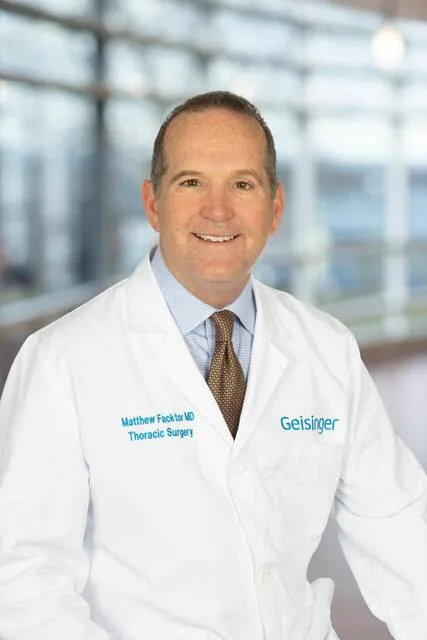
Home News Do you need a lung cancer screening? Facebook Twitter Pinterest Linkedin ReddIt Email Print By Matthew Facktor, M.D. Geisinger Get some peace of mind Facktor 🔊 Listen to this Annual lung cancer screenings can detect cancer early, before symptoms are obvious and when the condition is easier to treat. What is lung cancer screening? Lung cancer screenings are noninvasive tests that take a detailed digital image of your lungs. This low-dose CT scan uses about 75% less radiation than a traditional CT scan and only takes a few minutes. You can go back to your regular activities right away. Am I eligible for lung cancer screening? You’re a good candidate for a yearly lung cancer screening if you: • Are between ages 50 and 80 • Have a 20-pack-year history of smoking • Have smoked at some point in the last 15 years If any of these describe you, you may be eligible for a low-dose CT lung cancer screening. Is it covered by insurance? If your provider determines you’re eligible, a screening may be covered by your health insurance at no cost to you — but it’s always a good idea to check with your insurance first. And if you don’t have insurance, ask your healthcare provider for more information. Think of a lung cancer screening the way you do any other preventive exam. If you’re eligible, your provider can help you schedule a screening. What happens after a lung cancer screening? After your scan, the results will be sent to your doctor. They’ll review the findings with you and answer any questions. If you need further testing, they will discuss any next steps. Your doctor will create a plan built around your needs. Early signs and symptoms Early signs can be subtle, but common symptoms include: • Persistent cough that lasts more than 3 weeks • Chronic dry or hacking cough • Hoarseness • Repeated chest infections that seem harder to clear • Change in a long-standing smoker’s cough • Coughing up small amounts of blood • Unexplained weight loss • Chest discomfort or pain with deep breaths or coughing • New wheezing • Mild but ongoing fatigue • Dull aches in the shoulder or back when you haven’t had activity How do early lung cancer signs differ from symptoms of a chest infection? Chest infections often come with fever, chills and thick mucus and improve within days or a few weeks with rest or antibiotics. Early lung cancer signs are more persistent, often lack fever, may involve a cough that doesn’t go away and can include streaks of blood in sputum or unexplained weight loss. If symptoms linger beyond 3 weeks or keep returning, a lung cancer screening conversation is wise. Can breathlessness be an early warning sign of lung cancer? New or worsening shortness of breath without an obvious cause, especially with light activity, can be an early sign. Breathlessness that doesn’t improve over time should prompt a visit with your provider. Quit smoking to lower your risk of lung cancer Quitting smoking is an excellent way to reduce your risk of developing lung cancer. While smoking isn’t the only factor that increases lung cancer risk, it’s certainly a big risk factor. Although the idea of quitting may seem challenging, it doesn’t have to be. Start by talking to your healthcare provider. They’ll work with you to develop a plan and help you find resources to be successful. Remember, you may have a few stops and starts along the way — and that’s fine. The important part is to keep going. If you’ve tried to quit in the past, it’s never too late to try again. Matthew A. Facktor , MD, FACS, is a general thoracic surgeon and system chair of Thoracic Surgery for the Geisinger Heart Institute. Dr. Facktor obtained his undergraduate degree from the University of Michigan in Ann Arbor and his medical degree from Wayne State University in Detroit. He completed his general surgery residency at Rush-Presbyterian-St. Luke’s Medical Center in Chicago and his thoracic surgery fellowship at the George Washington University in Washington, D.C. Dr. Facktor is board certified by the American Board of Surgery and the American Board of Thoracic Surgery. He is a fellow of the American College of Surgeons, and maintains memberships in the Cardiothoracic Surgery Network, the General Thoracic Surgical Club, the Southern Thoracic Surgical Association and the Society of Thoracic Surgeons. Dr. Facktor’s clinical interests include lung cancer, lung cancer screening, lung nodules, esophageal cancer, mediastinal tumors, chest wall tumors and pleural disease. A large portion of his practice focuses upon robotic (minimally invasive) thoracic surgery, and his research interests center around the optimization of high-quality cancer care delivery. Local journalism matters, and your support makes it possible. You can help sustain this work by making a donation or choosing one of our subscription options. Subscribers enjoy valuable benefits, including full access to our e-edition, a reduced ad experience on timesleader.com, and more. Your support helps ensure independent, high-quality local news remains available today and for future generations. Thank you for standing with local journalism. Click for subscription offers. Matthew A. Facktor , MD, FACS, is a general thoracic surgeon and system chair of Thoracic Surgery for the Geisinger Heart Institute. Dr. Facktor obtained his undergraduate degree from the University of Michigan in Ann Arbor and his medical degree from Wayne State University in Detroit. He completed his general surgery residency at Rush-Presbyterian-St. Luke’s Medical Center in Chicago and his thoracic surgery fellowship at the George Washington University in Washington, D.C. Dr. Facktor is board certified by the American Board of Surgery and the American Board of Thoracic Surgery. He is a fellow of the American College of Surgeons, and maintains memberships in the Cardiothoracic Surgery Network, the General Thoracic Surgical Club, the Southern Thoracic Surgical Association and the Society of Thoracic Surgeons. Dr. Facktor’s clinical interests include lung cancer, lung cancer screening, lung nodules, esophageal cancer, mediastinal tumors, chest wall tumors and pleural disease. A large portion of his practice focuses upon robotic (minimally invasive) thoracic surgery, and his research interests center around the optimization of high-quality cancer care delivery.
By Evan Mitchell

By Richard 'Rick' O'Donnell

By Evan Mitchell

By Sophie Chen