
Real Estate
To Your Health: Symptoms of diabetes can be subtle
By Maya Rodriguez
Advertisement · Why this ad?
Sophia is a graduate of Bloomsburg University with a focus on education journalism. She has spent the past four years covering school board meetings and educational initiatives for local outlets like the Hazleton Standard Speaker.
More from Sophia →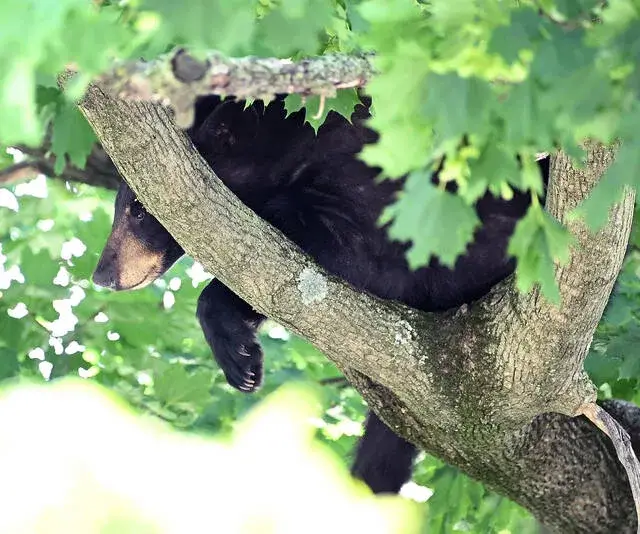
Tony Callaio file photo | For Times Leader
On a warm night in mid July, Brandan Smith heard a sound outside his house in rural Coshocton. Curious, he opened his door and walked outside. As his eyes adjusted to the dark, he saw a large, hulking figure in his driveway, rummaging in the bins and boxes he’d readied for trash pickup the next day.
“I immediately turned around, went back inside the house and slammed the door,” Smith recalled. “That image of something huge spooked me. And it just kind of dawned on me: It’s a bear.”
Certain that no one would believe him unless he had proof, Smith grabbed his phone, gathered his courage and went back outside to capture a video.
“Sure enough, the bear was still there, eating garbage,” Smith said. “I’d just gotten done cleaning out the deep freezer, and it was into the old freezer-burned ice cream.”
According to Smith, the bear seemed completely unbothered by his presence, even though he was only about 25 feet away. Unsure what to do, Smith called the police. Then he watched the bear ransack his trash pile until a police cruiser arrived half an hour later and scared it off with a spotlight.
After virtually disappearing from the Ohio landscape in the mid-1800s, black bears could be making a comeback. More than 1,500 bear sightings have been reported to the Ohio Department of Natural Resources (ODNR) since 2022. While the majority have been spotted in rural areas near Ohio’s borders with West Virginia and Pennsylvania, black bears have been seen in 69 of Ohio’s 88 counties, and some have wandered into more populated areas, including near Pataskala in Licking County in 2025.
According to the Ohio Division of Wildlife’s 2026 Ohio Black Bear Monitoring Report, the number of confirmed black bear sightings gradually rose in the 1990s and 2000s, plateaued during the 2010s, then sharply increased starting in 2022.
“On average, over the past 10 years the Division of Wildlife has received 239 black bear sighting reports per year,” the report stated. “In 2023, 260 sightings were reported in 49 counties. In 2024 we received 370 sightings in 55 counties. Sightings were the highest on record in 2025 with 537 sightings in 69 counties.”
And based on local accounts, bear sightings are likely under-reported. Anyone who sees a bear can report it to the division of wildlife via ODNR’s online Wildlife Reporting System or by calling 1-800-WILDLIFE (945-3543).
ODNR advises people who encounter bears not to approach them. If you see a black bear, remain calm and slowly back away. Do not run or climb trees, which can trigger a bear’s instinct to chase. If a bear approaches, try to look large by lifting your arms, and clap or shout to scare the bear.
Before the arrival of early American settlers, black bears were common in Ohio. But in the early 1800s, the state’s newly arrived residents began aggressively felling forests to make way for farms and settlements. They also trapped and killed bears that preyed on their crops and livestock. The arrival of the timber, iron and coal-mining industries only accelerated the destruction of the woodlands where black bears resided.
In 1803, forests covered about 95% of the state of Ohio. By 1900, only 10% of the state was wooded —but by then, the bears had been gone for half a century. Habitat loss and unregulated hunting had driven black bears from a region they had populated for millennia — the same fate faced by other large mammals in Ohio, including bison, elk, cougars and wolves.
Starting in the 1930s, occasional reports of black bear sightings began surfacing in Ohio, according to the ODNR Division of Wildlife. Reports became more regular in the 1990s, and the division of wildlife began tracking black bear observations across the state in 1993. The division soon collected enough evidence of bear activity that the state of Ohio changed the status of the species from “extirpated” to “endangered” in 1995.
Bear sightings gradually increased over the following decades and appeared to level out in the 2010s. Then, in the 2020s, the division of wildlife recorded a notable uptick in bear sightings. Of the 4,793 bear sightings the division recorded since it began collecting data in 1993, nearly a third occurred between 2022 and 2025.
Brandan Smith wasn’t the only resident of east-central Ohio’s Coshocton County to see a bear in recent months. A day or two after the police scared the bear from his property — and more than 10 miles east, near the Village of Fresno — Erica Gray was planting a pollinator garden beside her pond when she looked up and saw a “big, dark object.”
A bear with a white marking on its chest was resting on the hillside near her mother’s cabin. The bear eventually left but later returned to her mother’s bird feeder to lap up the grape jelly inside — a delicacy intended to attract Baltimore orioles, not bears.
In mid August, Erin Peoples, the principal of West Elementary School in nearby Newcomerstown, was preparing for the start of the school year when she received a message from her husband. He’d just received a notification from their Ring camera, a doorbell that doubles as a home security device. The attached video showed a black bear meandering onto their porch and peering through a window into their house.
“I immediately texted my daughters — they’re teenagers — and was like, ‘Stay inside,’” Peoples said.
After viewing the video, one of Peoples’ daughters shot back a skeptical text: “Is that AI?”
On the last Sunday in August, Carla Miller and her husband were pulling into the parking lot of the Wooly Pig Farm Brewery near the Village of Fresno, when she noticed a bear walking along the fence line inside the pig pasture.
“I said, ‘Oh my gosh, there’s a bear,’” Miller recalled. “And my husband of course ignored me. And I said, ‘Stop! I want to take a picture!’”
Miller said that a small crowd gathered to watch the bear, which “was not scared of people at all.” Even after several “momma pigs” ran the bear off, it returned and “just sat up there eating those pokeberries.”
On Oct. 3, Don Dunlap was fishing about two miles from Wills Creek Dam in western Coshocton County — part of more than 3,700 acres of public land and water used for flood control, hunting, fishing, and recreation.
“I was out there fishing and just happened to look up,” Dunlap said. “(A black bear) stopped 50 yards from me and was looking dead at me. He was coming up that backwater, probably getting fish.”
When the bear disappeared into the woods, Dunlap — a raccoon hunter who knows the area well — hopped in his truck and intercepted the bear on a nearby road so that he could capture a video. He and his wife returned to the area later that day to take pictures of tracks the bear left in the mud.
According to the division of wildlife, Coshocton County had one confirmed bear sighting in 2023, one confirmed bear sighting in 2024, and 11 confirmed bear sightings in 2025. While data is not yet available for 2026, The Reporting Project collected 24 accounts of bear sightings in the county between May 2026 and November 2026. It was able to confirm 16 of those accounts with photo or video evidence.
According to ODNR Wildlife Biologist Katie Dennison, “West Virginia and Pennsylvania have seen a lot of growth in their bear populations. That means the bears are starting to naturally expand to Ohio.”
Still, increased bear sightings do not necessarily mean that bears are settling in Ohio. The division of wildlife’s 2026 Ohio Black Bear Monitoring Report explains that most of the bears in Ohio are “dispersing or transient males” that “likely do not stay in the state for long.”
Wilkes-Barre, Pennsylvania
Real Estate
Saturday, November 14, 2026
6 min
By Maya Rodriguez

By David Kim

By Jessica Huang

By Tina Chang